Water Softener vs. Water Filter: Which Does Your Columbus Home Need?
If you’ve noticed spots on your dishes, scale buildup on faucets, chlorine taste in your drinking water, or simply want to improve your home’s water quality, you may be wondering whether you need a water softener or a water filter.
The truth is that water softeners and water filters solve different problems. Many Columbus homeowners benefit from one, while others choose to install both for more complete water treatment.
Understanding the difference can help you choose the right solution for your home.
Understanding Columbus Water Quality
Columbus Water & Power supplies drinking water from multiple sources, including the Scioto River, Big Walnut Creek, and groundwater wells throughout the Scioto River Valley. Water is treated through a multi-step process that includes filtration, disinfection, corrosion control, and fluoride addition before it reaches homes and businesses.
According to the Columbus Consumer Confidence Report, water hardness throughout the system ranges from approximately 98 to 125 parts per million, or about 5.7 to 7.3 grains per gallon. This places much of Columbus’ water in the moderately hard to hard water range.
While the water meets all federal and state drinking water standards, many homeowners still experience issues related to hardness minerals, chlorine smell, scale buildup, or other water quality concerns.
What Does a Water Softener Do?
A water softener is designed specifically to remove hardness minerals such as calcium and magnesium from your water.
These minerals are naturally present in Columbus’ water sources and are responsible for many common household water problems.
Hard water can cause:
- White scale buildup on faucets and showerheads
- Spots and film on dishes and glassware
- Soap scum in showers and sinks
- Reduced efficiency of water heaters and appliances
- Dry skin and hair after bathing
- Stiff or faded laundry
A water softener exchanges hardness minerals for sodium or potassium ions, preventing mineral buildup throughout your plumbing system.
Because Columbus water contains measurable hardness levels throughout the distribution system, many homeowners choose a water softener to help protect appliances and improve everyday water use.
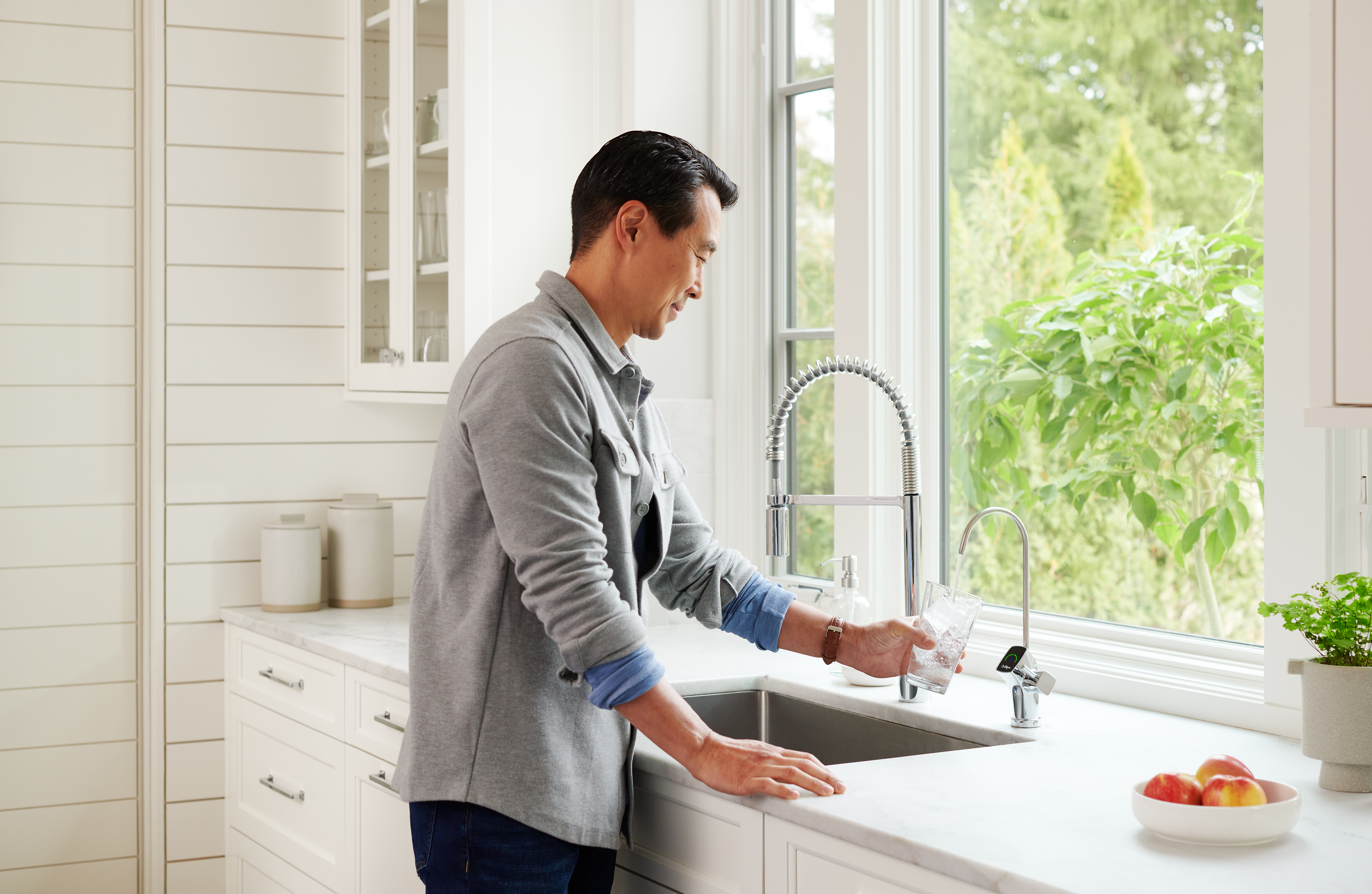
What Does a Water Filter Do?
A water filter addresses different water quality concerns than a softener.
Instead of removing hardness minerals, filters are designed to reduce contaminants, chemicals, tastes, odors, and particles that may be present in the water.
Depending on the type of system, a water filter may help reduce:
- Chlorine taste and odor
- Sediment
- Volatile organic compounds (VOCs)
- Lead
- PFAS and other emerging contaminants
- Certain pesticides and herbicides
- Other unwanted substances
Water filtration systems can be installed at a single faucet or throughout the entire home.
Many Columbus homeowners choose filtration systems because they want cleaner-tasting water, additional protection from contaminants, or greater confidence in the water they drink and cook with every day.
Water Softener vs. Water Filter: What’s the Difference?
| Water Softener | Water Filter |
| Removes hardness minerals such as calcium and magnesium. | Reduces contaminants that affect water quality, taste, odor, and safety. |
| Helps prevent scale buildup on faucets, appliances, and plumbing. | Helps reduce chlorine, sediment, PFAS, lead, and other contaminants depending on the system. |
| Improves soap performance and helps leave skin, hair, and laundry feeling cleaner. | Improves the taste, smell, and overall quality of drinking water. |
| Does not remove most contaminants or chemicals. | Does not remove hardness minerals or prevent scale buildup. |
| Best for addressing hard water problems. | Best for addressing water quality and contaminant concerns. |
Do Columbus Homes Need Both?
In many cases, yes.
Because Columbus water contains moderate hardness levels, a water softener can help reduce scale and improve efficiency throughout the home.
At the same time, many homeowners want additional filtration for drinking water quality, chlorine reduction, or concerns about emerging contaminants such as PFAS.
Combining a softener with a filtration system allows each system to do what it does best.
A common setup includes:
- A whole-house water softener to treat hard water
- A whole-house filtration system for chlorine and other contaminants
- A reverse osmosis drinking water system for purified water at the kitchen sink
This approach provides comprehensive treatment throughout the home while improving both water quality and appliance protection.
Culligan Solutions for Columbus Homes
Culligan offers customized water treatment solutions designed to address the specific water conditions found throughout the Columbus area.
Water Softeners
Culligan’s high-efficiency water softeners help reduce hardness minerals that contribute to scale buildup, appliance wear, and soap inefficiency. Smart technology and demand-based regeneration help maximize efficiency while minimizing salt and water usage.
Whole-House Water Filters
Whole-home filtration systems help reduce chlorine taste and odor, sediment, and other unwanted contaminants before water reaches your faucets, showers, and appliances.
Reverse Osmosis Drinking Water Systems
Culligan reverse osmosis systems provide advanced drinking water filtration at the point of use and can reduce a wide range of contaminants while delivering great-tasting water for drinking, cooking, coffee, and ice.
PFAS Filtration Solutions
As PFAS regulations continue to evolve nationwide, Culligan offers treatment options designed to reduce PFAS compounds and provide additional peace of mind for homeowners concerned about these emerging contaminants.
Schedule a Free Water Test in Columbus
Every home’s water is a little different. The best way to determine whether you need a water softener, water filter, or both is through professional water testing.
A free in-home water test can help identify hardness levels, chlorine, taste and odor concerns, and other factors that may be affecting your home’s water quality. Get started and discover the right water treatment solution for your Columbus home.