
Why Ohio Well Owners Choose Culligan of Columbus For Well Water Treatment
Our systems are second to none. The real advantage is that we make treating well water simple.
-
Your Well Log Tells Us More Than Your Address Does
Eighteen counties is a lot of different rock. Ohio EPA’s long-running aquifer monitoring, drawn from about 282 wells and 6,000 samples, puts median hardness in the carbonate aquifer at 450 mg/L, around 26 grains, against 214 mg/L, about 12.5 grains, in sandstone. That is a fourteen grain spread inside one service area, and it tracks the bedrock under Marysville and Marion versus the bedrock out toward Zanesville and Logan. Then there is the Ohio Shale belt running north to south through Delaware County, western Licking, eastern Marion and Morrow and the north end of Franklin. The state’s geologists describe water under that shale as very high in sulfur, hydrogen sulfide and iron, and note that it gets more objectionable the deeper you go. Those figures come from public supply wells rather than houses, so we treat them as the shape of the problem. Your well log gives us the depth and the formation. A test gives us your numbers.
-
Ohio Tested Your Well For Two Things. Maybe Three.
Private wells in Ohio are permitted by your local board of health, and the rules require a sample after a well is built, altered or sealed. Read the rule closely and it gets narrower than people assume. The board of health collects for total coliform and E. coli. Nitrate is only added when a pre-screening turns up 5 mg/L or more. That is the whole list. Hardness, iron, manganese, sulfate and arsenic are not in it, and the rule requires no periodic or ongoing sampling of any kind. So a well that passed told you something real about bacteria. It told you nothing about iron, which the best study we have found in this region says is above the standard in seven of every ten wells. Nobody retests your well after that, and no reminder arrives.
-
Expert Installation, And We Maintain It
Culligan has been in water treatment for more than 85 years and it’s all we do. Your local Culligan delivers, installs, and maintains the system for you, so there’s no shipping damage, no unboxing, no guessing about install location, and no third-party service line when it needs attention. Schedule an appointment, then enjoy the water.
-
Make Your Water Work For You
On the fence about whether you need treatment? These are the returns that pay a system off over time.
- Over $437 a year saved on soaps, shampoos and detergents in soft water
- Over $115 a year in gas water heater energy savings
- Up to 50% more life out of dishwashers and washing machines
- No more replacing fixtures and appliances that iron ruined early
Local Resources
Central Ohio Well Water
Why Is There So Much Iron
In My Well Water?
Because the groundwater here is chemically reducing, which is the condition that pulls iron out of the rock and keeps it dissolved until it hits the air in your tub. We have an unusually good number for this one. The USGS sampled 168 private residential wells in Licking County, and of the 102 tested for iron, 71 percent came back above the 300 microgram per liter standard. The split by well type matters more than the headline: wells finished in the glacial deposits ran a median of 1,760 micrograms per liter with 94 percent above the standard, while bedrock wells ran a median of 403 with 63 percent above it. Those are real houses in a county we serve, not public supply wells, which makes it the most useful dataset in this part of Ohio. Iron is removed with filtration rather than softening, and the right media depends on your pH.
Should I Be Testing
For Arsenic?
Yes, and the same Licking County study is the reason. Of those 168 private wells, 20 exceeded the 10 microgram per liter limit for arsenic, about 12 percent, with a high of 43.8. Again the well type decided it: 24 percent of the wells finished in glacial deposits were over the limit against 8 percent of bedrock wells, a difference the researchers found statistically strong. The mechanism is the same one that mobilizes the iron. Arsenic here appears only in strongly reducing groundwater, freed from iron coatings on the sediment by organic carbon, and the glacial deposits hold more of that carbon than the older bedrock does. Ohio EPA’s separate monitoring of public supply wells points the same way, with sand and gravel wells carrying the arsenic problem rather than sandstone. A water softener will not remove arsenic. Reverse osmosis or a dedicated arsenic medium will.
We're In Coal Country. What About
Acid Mine Drainage?
Here is the honest answer, which is more useful than a scary one. Ohio EPA states that acid mine waters are a significant threat to groundwater in mined areas, and the Pennsylvanian bedrock under Perry, Hocking, Athens, Vinton, Morgan and Meigs is exactly that setting. What nobody publishes is domestic well sampling to tell you whether yours is affected. The state’s own guidebook on mine drainage in southeastern Ohio is a surface water and mine discharge document from end to end, and when the Division of Geological Survey assessed groundwater in Perry and Hocking Counties it wrote that strip mined and abandoned underground mined areas were not evaluated. So the hazard is documented and the household data does not exist. One thing that does exist is Ohio law: a coal operator is required to replace the water supply of a property owner whose domestic well is contaminated, diminished or interrupted by the mining operation, and to cover the cost of water in the meantime. The state wrote a remedy for this. It just never wrote down what is in your well, which is what a test is for.
TREATMENT OPTIONS
Three Problems, Three Fixes For Your
Ohio Well
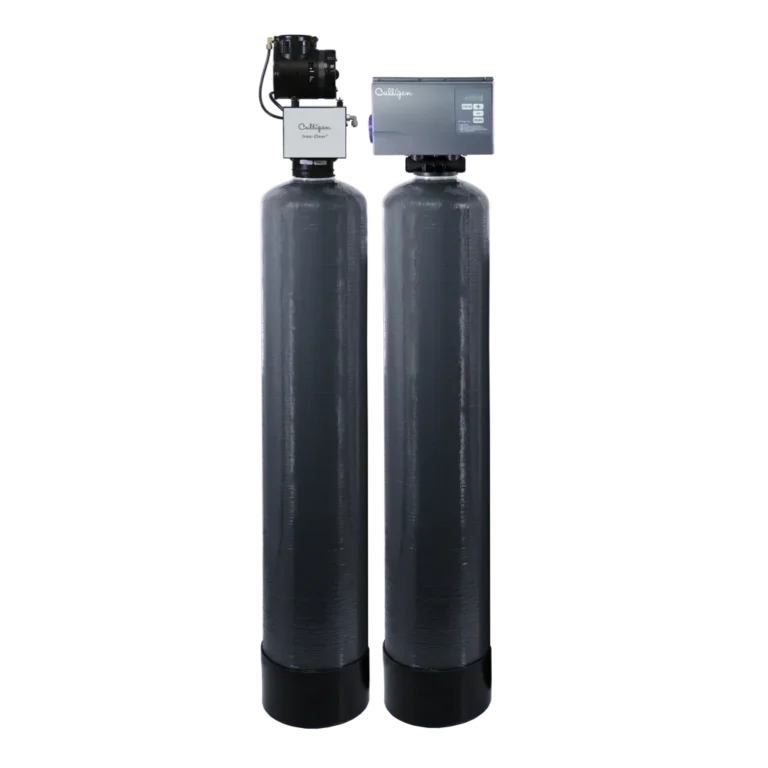
Iron & Sulfur Filtration
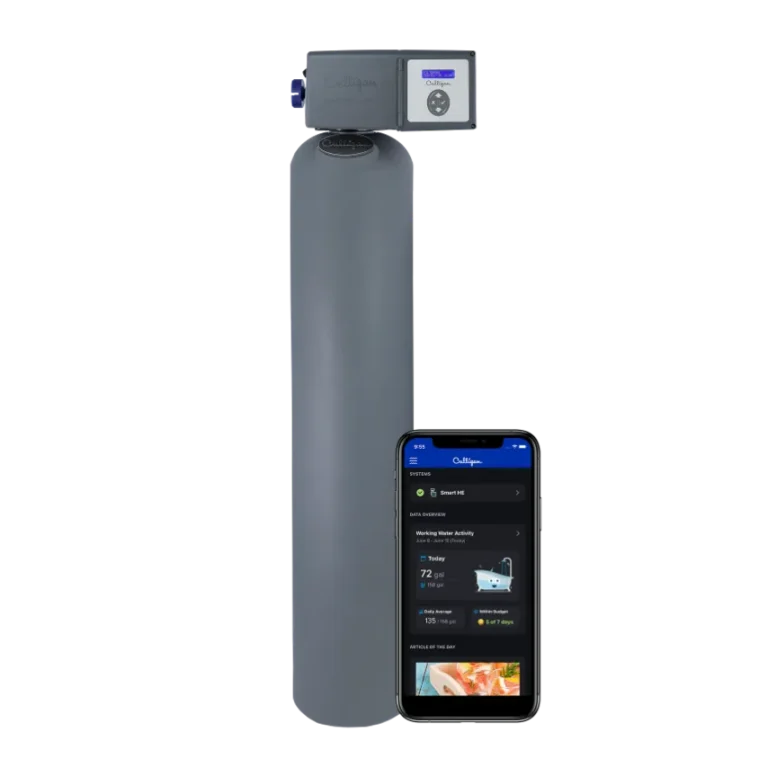
Water Softening
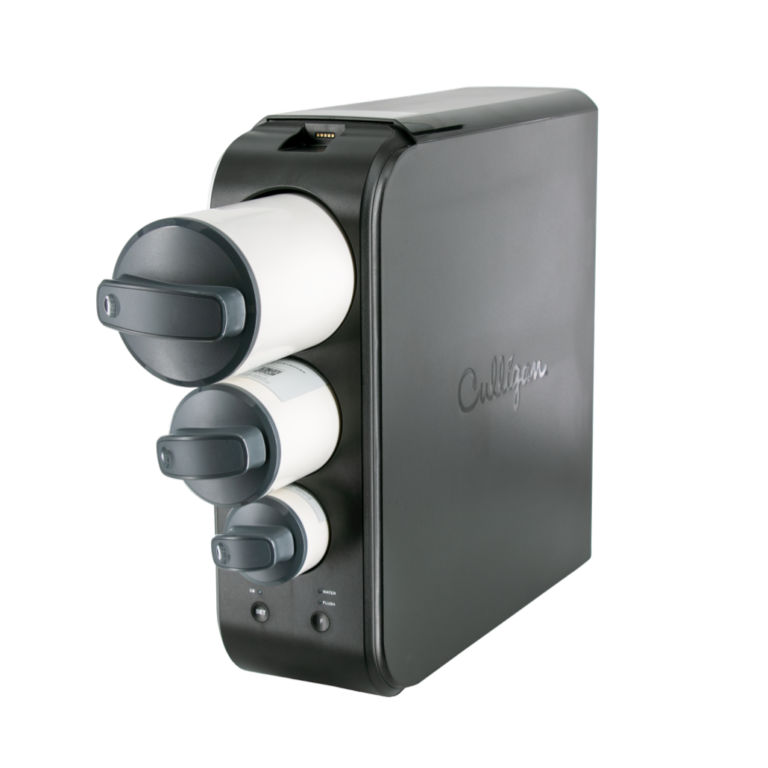
Drinking Water Systems
The Proof
Why Do Ohio Homeowners TRUST Our
Well Water Treatment Systems?
The quality of the water in my house is better than it has ever been. Cleaner, drinkable and scent/rust free with your system installed (we have well water).

After being told by numerous other companies that I would have to replace my whole filter system, plus a new pressure tank, for thousands of dollars, I called Culligan for a 3rd opinion. Karen Moore came in like a breathe of fresh air, showed me how to pressure my tank back up, turned back on the filters that had been left off by the previous inspectors, and arranged for a repair of the softener.
Based on our experiences and consultations with other companies who provide whole home water filtration systems, we subsequently have and will continue to recommend ONLY Culligan Water for whole home water filtration needs!
Rust Stains? Sulfur Smell? Scale?
Find Out What's Really
In Your Ohio Well Water!
• Fast on-site results, no mailing
• We test hardness, iron, manganese and pH
• Flexible sample pickup options

Frequently Asked Well Water Treatment Questions
We Have Answers
What does Ohio require me to test my well for?
Less than people assume. Under Ohio's private water system rules your local board of health collects a sample after a well is built, altered or sealed, and analyzes it for total coliform and E. coli. Nitrate gets added only when a pre-screening finds 5 mg/L or more. Nothing else is required, and the rule calls for no periodic or ongoing sampling. Hardness, iron, manganese, sulfate and arsenic are not part of it.
Who issues the permit?
Your county board of health, not the state. The Ohio Department of Health writes the rules and provides technical support, and the local health district does the permitting and the sampling. Athens County, for instance, permits every new, replacement and altered private water system in the county and tests for bacteria and nitrate, the same two things the state rule names.
How hard is well water around here?
It depends which side of the service area you are on. Ohio EPA's aquifer monitoring puts median hardness at about 450 mg/L, roughly 26 grains, in the carbonate bedrock that underlies the western and northern counties, against about 214 mg/L, roughly 12.5 grains, in sandstone. That is a fourteen grain spread across one dealership's territory. Those are public supply wells rather than houses, so treat the numbers as the shape of the problem and get your own.
How does that compare to Columbus city water?
Columbus is one of the few Ohio cities that softens its own water. The city reports softening to about 120 ppm on average, roughly 7 grains, using soda ash or caustic soda with hydrated lime, and its three plants come in between 92 and 125 mg/L. A well on the carbonate aquifer west or north of the city can run four times that, with nobody softening it before it reaches your heater.
Why does my water smell like rotten eggs?
Hydrogen sulfide, and in one part of this territory there is a specific geologic reason for it. The Ohio Shale belt runs north to south through Delaware County, western Licking, eastern Marion and Morrow and the north end of Franklin. The state's Division of Geological Survey describes water under that shale as very high in sulfur, hydrogen sulfide and iron, and warns that the quality gets more objectionable with depth. No agency publishes a figure for how many Ohio wells have sulfur odor, so we will not invent one, but if you are in that belt the geology is on the record. A sulfur filter removes it, and the method depends on your iron level.
How common is iron in wells here?
Common enough that it is the default assumption. The USGS sampled 168 private residential wells in Licking County and found iron above the 300 microgram per liter standard in 71 percent of the 102 wells it tested for it. Wells in the glacial deposits were worse, at a 1,760 microgram median with 94 percent over the standard, against 403 and 63 percent for bedrock wells. That is actual household data from a county we serve.
Will a water softener take the iron out?
It can carry a limited amount along with the hardness, but at the levels common here a dedicated iron filter is usually the right answer. Test iron, hardness and pH together before anyone sells you equipment, because which media works depends on all three.
Is arsenic a real concern in central Ohio?
It is worth one test. In that same Licking County study, 20 of 168 private wells were above the 10 microgram per liter limit, about 12 percent, and the highest result was 43.8. Wells in glacial deposits were three times more likely to exceed it than bedrock wells. It is odorless and tasteless, so nothing about your water tells you either way, and a softener does not remove it.
We're in coal country. Should I worry about mine drainage?
It is a documented hazard and an undocumented household risk, which is an awkward but honest combination. Ohio EPA says acid mine waters are a significant threat to groundwater in mined areas. But the state's guidebook on mine drainage in southeastern Ohio deals with streams and mine discharges rather than wells, and when the Division of Geological Survey assessed groundwater in Perry and Hocking Counties it stated that mined areas were not evaluated. Worth knowing: Ohio law requires a coal operator to replace the water supply of a property owner whose well is contaminated, diminished or interrupted by the mining, and to pay for water until it is replaced. If you are near old workings, a test is the only thing that answers the question for your address.
My well barely keeps up. Is that a water quality problem?
Usually not, it is geology. In the southeastern counties the Pennsylvanian bedrock is a modest aquifer. The state's assessment of Perry County describes the Pottsville and Allegheny units at 3 to 10 gallons a minute and the Conemaugh at under 3, and the Hocking County report says wells in those units are marginal for anything beyond a small household and may need extra storage or a cistern as backup. That changes how we size equipment, because a treatment system has to work with the flow the well can deliver. Tell us your yield when we visit.
Is there radium or uranium in Ohio well water?
Not meaningfully. Ohio EPA states that Ohio's geologic setting has few natural sources of radionuclides, and the exceptions it names are settings that are not used as aquifers. Statewide, only a handful of public water systems show any radionuclide impairment. It is not a central Ohio well water story and we are not going to sell it as one.
What about oil and gas drilling near my well?
The sensible step is a baseline test before any drilling starts, which is what the Ohio Department of Natural Resources recommends and what Ohio State Extension publishes guidance on. Establishing what your water looked like beforehand is the only thing that makes a later comparison meaningful. Worth knowing too that dissolved methane in central Ohio groundwater is often natural. The Licking County arsenic work found methane-producing conditions occurring geologically, not industrially.
Will my water taste salty after a softener is installed?
No. A properly functioning water softener will never make your water taste salty. The small amount of sodium added is far too little to create a salty taste.
How does a water softener work?
Through ion exchange. As it removes the calcium and magnesium that make water hard, it replaces those ions one for one with sodium. The amount added is proportional to how hard your water is, and in most cases it isn't a significant contributor to the sodium in your diet.
Will a softener reverse damage already done to my appliances?
Yes. Once a softener is installed it begins removing the scale that hard water built up. It takes a long time to clear, but it will clear.
Are chemicals added to my water to soften it?
Other than salt or potassium chloride, no. A softener reduces the cleaning supplies and detergents going down your drain, which makes it a net positive environmentally.
How often do I need to add salt?
Modern softeners recharge based on how much water you use and how hard it is. Most of our customers add salt once or twice a year, though 26 grain water out in the carbonate country works a system harder than 12 grain water does.
Do I need a softener, a filter, or both?
Most well homes in this territory end up with both, because hardness and iron are separate problems with separate solutions. Whole home filtration paired with softening is the usual answer, with a drinking water system added when arsenic or dissolved solids show up.
Is my well water safe to drink without treatment?
Iron, sulfur and hardness are nuisance problems at the levels we usually find. Arsenic, nitrate and bacteria are health questions, each one a separate test, and worth running on any private well no matter what the result was the year the well went in. Start with a water test and we'll tell you honestly which category your results fall into.
Where should I get started?
Every recommendation we make starts with knowing what is in your water. The test is free, it happens at your house, and it takes about half an hour. You'll get your numbers explained in plain language and an honest answer about whether you need treatment at all.

Facebook